
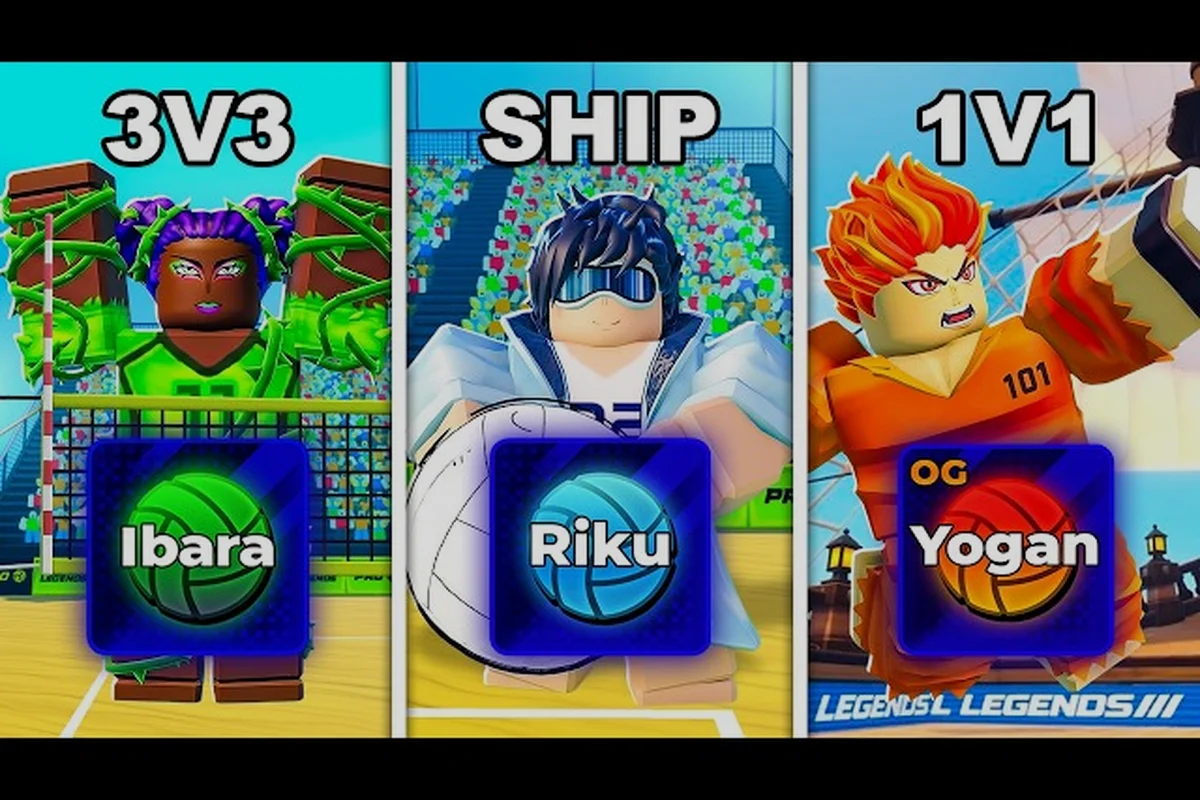
Choosing the right queue changes how you experience every rally, rotation, and spike. Volleyball Legends game modes split into casual pickup lobbies, competitive ranked ladders, full 6v6 team play, and private VIP servers, each with distinct server sizes and matchmaking rules. Understanding these differences helps you avoid queueing into the wrong lobby and wasting time on a mode that does not fit your goals.
According to the official gameplay video, each mode in volleyball legends adjusts the number of players, court size, and special power-up frequency to create distinct pacing and strategic demands.
How Pickup Mode Works
Pickup mode is the default entry point for most players because it drops you into a match quickly without rank pressure or long queue times. The volleyball legends pickup mode uses a standard lobby system where you join a server, wait for enough players, and then rotate through positions as the match progresses. Server size in pickup typically ranges from 4 to 12 players depending on the map and time of day, though community reports suggest peak hours fill 6v6 lobbies faster than off-peak windows.
The core appeal of pickup is flexibility. You can leave between matches without penalty, experiment with new styles, or warm up before entering ranked. Because there is no MMR tracking, the skill gap in a single lobby can be wide, which means you might face a complete beginner and a veteran in the same rotation. This randomness makes pickup ideal for learning mechanics but frustrating for players who want consistent teammates.
| Pickup Feature | Description | Best For |
|---|---|---|
| Queue Time | Usually under 60 seconds | Quick sessions |
| Skill Matching | None or minimal | Casual practice |
| Leave Penalty | None | Testing new styles |
| Team Size | 2v2 to 6v6 | Flexible groups |
| Progression | No rank points | Warm-up matches |
One advantage that often goes unnoticed is the ability to observe higher-level players in real time. Since pickup lobbies mix skill levels freely, you can watch how experienced players position themselves during serve receive or how they time their blocks without the pressure of a ranked match. Players report that spending a few pickup games before queueing ranked noticeably improves their first-touch consistency, especially when learning the timing for a Quick Set or a Back Row Attack.
Ranked Mode Guide and Progression
The volleyball legends ranked mode guide starts with understanding that ranked matches track your performance across multiple games and assign you a visible tier. Unlike pickup, ranked uses stricter matchmaking that attempts to pair you with players near your current rating, which reduces the chaos of mixed-skill lobbies but increases queue times during low-population hours. Most ranked lobbies run 6v6 because the format rewards coordinated rotations and specialized positions.
Ranked progression typically follows a tier system where wins grant points and losses deduct them, though the exact point values may vary by patch. Community data suggests that consistent performance matters more than individual highlight plays, because the system evaluates your contribution across the full match rather than a single spike or block. This means a player who maintains solid serve receive and avoids unforced errors often climbs faster than a flashy scorer who gives up easy points.
| Ranked Tier | Typical Player Count | Queue Time Estimate | Key Requirement |
|---|---|---|---|
| Bronze to Silver | High | 30-60 seconds | Basic rotations |
| Gold to Platinum | Medium | 1-3 minutes | Positional awareness |
| Diamond and above | Low | 3-8 minutes | Team coordination |
| Placement Matches | Varies | 1-2 minutes | Initial calibration |
The ranked queue also introduces placement matches that determine your starting tier before you earn or lose points normally. During placement, the system samples your performance across several games, so a strong showing early can place you several tiers higher than a mediocre start. If you want a deeper breakdown of how the ranking system calculates points and what each tier requires, the Volleyball Legends ranked guide covers the full progression path from placement to the highest rank.
6v6 Mode Structure and Rotations
The volleyball legends 6v6 mode is the most structured queue because it assigns each player a specific role: setter, outside hitter, middle blocker, opposite hitter, or libero. This format forces you to learn rotation rules and positional responsibilities, which makes it the preferred mode for players who want a realistic volleyball experience. Server size for 6v6 is fixed at twelve players, split into two teams of six, with no room for partial lobbies.
Rotations in 6v6 follow standard volleyball logic where players shift clockwise after winning a rally on serve. Because each position has distinct duties, a middle blocker who drifts too wide leaves the center open for quick attacks, while a libero who overcommits to one side creates a gap on the opposite line. Learning these rotations takes time, but the structure rewards teams that communicate and trust their assignments.
| Position | Primary Duty | Key Skill | Common Mistake |
|---|---|---|---|
| Setter | Second touch distribution | Decision speed | Telegraphing sets |
| Outside Hitter | Primary attack option | Approach timing | Hitting into blocks |
| Middle Blocker | Quick attacks and blocks | Read timing | Late block jumps |
| Opposite Hitter | Right-side attack | Cross-court shots | Ignoring back row |
| Libero | Serve receive and defense | Platform control | Overcommitting |
The 6v6 format also changes how you evaluate individual performance. In smaller modes like 2v2 or 3v3, a single dominant player can carry the match, but 6v6 exposes weak rotations and poor communication quickly. Players who transition from pickup to 6v6 often report that their first few matches feel chaotic because the court coverage demands constant awareness of five teammates rather than one or two. The bump and receive guide breaks down court positions and rotation rules in detail if you need to drill the fundamentals before queueing.
Private Servers and VIP Server Options
Private servers give you full control over who joins, which makes them ideal for scrims, team practice, or playing with friends without random matchmaking interference. The volleyball legends private server option typically requires a monthly fee or a one-time purchase, depending on the platform's current pricing model. Once you own a private server, you can set the server size, choose the map, and invite specific players through a link or friend list.
VIP servers function similarly but often include additional perks like priority queue access, exclusive cosmetics, or the ability to host larger lobbies. Community reports indicate that VIP server owners can adjust settings that normal private servers cannot, such as match length, score caps, or even disabling certain mechanics for practice drills. These options make VIP servers popular among competitive teams that want to run controlled scrimmages without interference.
| Server Type | Control Level | Typical Cost | Best Use Case |
|---|---|---|---|
| Public Pickup | None | Free | Casual matches |
| Private Server | High | Monthly fee | Team practice |
| VIP Server | Very High | Premium fee | Controlled scrims |
| Ranked Queue | Matchmaking | Free | Competitive play |
One practical use for private servers is drilling specific rotations without the pressure of a live match. You can set the server to 6v6, invite exactly twelve players, and run the same play repeatedly until everyone understands their assignment. Because private servers do not affect your ranked rating, mistakes carry no penalty, which accelerates learning. If you are new to multiplayer and want to understand how to set up matches with friends, the pickup match guide walks through the basic lobby and settings options.
Choosing the Right Mode for Your Playstyle
Your ideal queue depends on what you want from each session. If you have fifteen minutes and want a low-stakes match, pickup is the obvious choice because it loads fast and carries no commitment. If you want to measure your progress against similarly skilled opponents, ranked provides the structure and feedback loop that casual modes lack. If you want to master a specific position or rotation, 6v6 forces you to engage with the full tactical layer of volleyball.
Players who split their time across modes often report better overall improvement than those who stick to one queue exclusively. Pickup builds mechanical comfort, ranked sharpens decision-making under pressure, and 6v6 develops positional discipline. Private servers then give you a space to isolate weaknesses without affecting your public rating. The key is matching the mode to your current goal rather than queueing out of habit.
| Goal | Recommended Mode | Time Commitment | Skill Focus |
|---|---|---|---|
| Quick warm-up | Pickup | 10-20 minutes | Mechanics |
| Competitive climb | Ranked | 30-60 minutes | Decision-making |
| Position mastery | 6v6 | 20-40 minutes | Rotations |
| Team practice | Private/VIP | Flexible | Coordination |
| Learning basics | Pickup | 15-30 minutes | Fundamentals |
One common mistake is treating ranked as the default mode for every session, which leads to burnout and rating anxiety. Community data suggests that players who alternate between pickup and ranked maintain higher win rates over time because they enter ranked matches mentally fresh rather than fatigued from back-to-back competitive games. The same logic applies to 6v6, where a focused hour of rotation practice often beats three hours of unfocused play.
Frequently Asked Questions
What is the difference between pickup and ranked mode?
Pickup mode has no skill-based matchmaking or rank points, so you can join and leave freely without penalty. Ranked mode tracks your performance, assigns a visible tier, and attempts to match you with similarly skilled players. Ranked queues take longer but offer more consistent competition and a clear progression path.
How many players are in a 6v6 match?
A 6v6 match requires exactly twelve players split into two teams of six. Each team fields a setter, outside hitters, middle blockers, an opposite hitter, and a libero. The fixed server size means you cannot start a 6v6 match with fewer than twelve players, unlike pickup modes that scale down.
Can I play Volleyball Legends with only my friends?
Yes, private servers and VIP servers let you control exactly who joins your lobby. You can set the server size, choose the map, and invite friends through a link or friend list. Private servers typically cost a monthly fee, while VIP servers add extra customization options like match length and score caps.
Does playing pickup mode improve my ranked performance?
Pickup mode builds mechanical comfort and lets you observe higher-level players without rank pressure, which translates to better first-touch consistency in ranked matches. Players who warm up in pickup before queueing ranked often report fewer unforced errors and faster reactions during serve receive and defensive rotations.
What is the fastest way to learn rotations?
The fastest way is to use a private server with exactly twelve players and drill the same rotation repeatedly until everyone understands their assignment. Because private servers do not affect your ranked rating, mistakes carry no penalty. Pair this with 6v6 matches to apply the rotations under live pressure.