
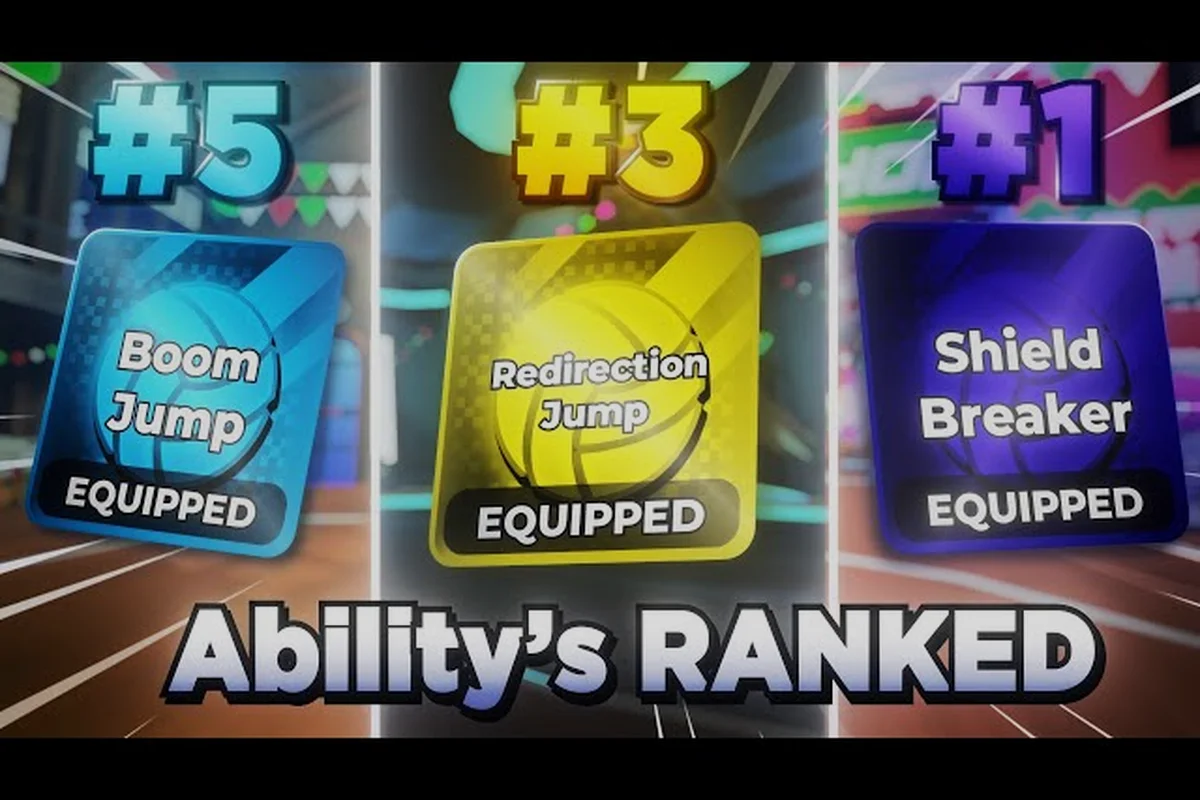
Understanding the full volleyball legends ability styles roster matters more than raw stats, because a style that looks weak on paper can completely shift a ranked match with the right positioning and timing. Community testing consistently shows that secret abilities often outperform standard ones when players commit to their specific play patterns, which means you need to know exactly what each style brings before you lock in your next match. This guide ranks every ability set from the hidden spiker to the newest Feiko setter and explains which picks actually carry games in the current meta.
Style Ability Overview and Core Archetypes
Every playable style in the game falls into one of four broad archetypes: Spiker, Setter, Defender, and All-Rounder. The distinction matters because ability cooldowns, movement speed scaling, and jump timing all shift depending on which archetype you select. According to community tier breakdowns, the strongest volleyball legends ability styles tend to cluster around spikers and secret defenders, while standard setters require more coordination to extract value from their kits.
The Secret Spiker archetype, represented by characters like Jinko, focuses on high vertical reach and late-contact spikes that beat blockers who commit early. Its ability window rewards players who delay their jump input until the last possible frame, which creates a deceptive arc that defenders struggle to read. On the opposite end, the Secret Defender archetype, exemplified by Mikage, trades offensive power for floor coverage and rapid recovery after dives.
The following table breaks down the core identity of each major archetype so you can see where your preferred play pattern fits: the Secret Spiker and Secret Defender kits skew toward reaction-based timing windows, while the Secret Setter and All-Rounder demand proactive positioning reads that begin before the opponent's touch. This split explains why solo queue players gravitate toward spikers and defenders — their ability value spikes during a single, readable moment (the setter touch or the opponent's spike) — whereas setters must chain multiple micro-decisions across a rally to convert the same cooldown investment into points. If you find yourself whiffing ability activations on a setter, the issue is rarely mechanical input speed; it is almost always that your mental model is still waiting for the "perfect ball" instead of controlling the pace that creates it.
| Archetype | Primary Strength | Key Weakness | Best Ability Window |
|---|---|---|---|
| Secret Spiker | Late-contact spike angle | Slow floor recovery | After setter touch |
| Secret Setter | Quick touch and redirect | Low spike power | Before block forms |
| Secret Defender | Wide dive radius | Weak serve pressure | During opponent spike |
| All-Rounder | Balanced stat spread | No dominant stat | Any phase |
Setters in particular demand a different mental model than spikers. While a spiker waits for the perfect ball, a setter controls the pace of the entire rally, which means mediocre setters actively hurt their team more than mediocre spikers do. The new Feiko setter shifts this balance by adding a redirect ability that can reset a broken play into a clean spike opportunity.
Ranking the Best Spiker Ability Styles
When players ask which volleyball legends style guide points to the strongest offensive option, the answer almost always lands on the secret spiker variants. The reason is straightforward: a spiker who can consistently beat the block generates points without needing a perfect receive, while a defender can only prevent points rather than score them. Community reports from high-ranked lobbies indicate that teams running two secret spikers and one secret setter win more often than balanced compositions in solo queue.
Jinko stands out among spiker options because his ability extends the contact window after the peak of the jump. This means you can start your swing early, watch the blocker commit, and then adjust your contact angle mid-air. The Secret Spiker ability set also includes a slight forward drift that helps you reach balls set slightly off the net.
The table below compares the offensive output potential of the main spiker styles based on community testing data, with Spike Power measuring kill velocity at the point of contact and Angle Control reflecting how late into the swing you can redirect the ball away from a committed blocker. Solo Carry Potential factors in recovery speed after landing, because a spiker who cannot transition back to defense after a blocked hit forces the setter to cover open court on the next rally.
| Spiker Style | Spike Power | Angle Control | Recovery Speed | Solo Carry Potential |
|---|---|---|---|---|
| Jinko (Secret) | High | Excellent | Moderate | Very High |
| Standard Spiker | High | Good | Moderate | High |
| Taichou (Secret Setter) | Moderate | Good | Fast | Moderate |
| Feiko (New Setter) | Moderate | Very Good | Fast | Moderate |
What makes Jinko particularly dangerous is that his ability style punishes passive blockers. If you are facing a defender who waits on the ground instead of committing to a jump, the late-contact window lets you place the ball into the empty corner before they can react. This interaction is why spiker styles dominate the volleyball legends best style conversation in most patch discussions.
Defensive and Support Ability Styles Ranked
Defensive styles do not generate highlight clips, but they win games by extending rallies that your spikers eventually convert. Mikage as the secret defender brings a wider dive radius and faster recovery from floor contact, which allows him to reach balls that would otherwise be free points for the opponent. His ability style also includes a brief speed boost after a successful dig, which helps reposition for the follow-up touch.
The support category includes the secret setter Taichou and the new Feiko setter. Taichou specializes in quick, low-arc sets that give spikers less time to read but also less time for blockers to react. Feiko introduces a redirect mechanic that can salvage broken passes, which makes him a strong pick when your team lacks a dedicated receiver.
The comparison below highlights how defensive and support styles stack up in ranked play, but the raw rankings only tell part of the story: Mikage's wider dive radius and post-dig speed boost give him the highest rally-extension ceiling among defenders, while Feiko's redirect mechanic can turn a broken pass into a hittable set that Taichou would have to dump or overhand bump. The skill-floor column matters most in solo queue, where a Standard Defender with low execution demands often outperforms a poorly timed Feiko redirect, yet premade stacks that coordinate around Taichou's quick low-arc tempo can punish blockers who rely on reading standard set trajectories.
| Support/Defender Style | Rally Extension | Team Utility | Skill Floor | Skill Ceiling |
|---|---|---|---|---|
| Mikage (Secret Defender) | Excellent | High | Low | Very High |
| Taichou (Secret Setter) | Good | Very High | Moderate | High |
| Feiko (New Setter) | Very Good | Excellent | Moderate | Very High |
| Standard Defender | Good | Moderate | Low | Moderate |
One key insight from community testing is that Feiko does not replace Taichou in every situation. The redirect ability has a longer cooldown than a standard set, which means Taichou still wins in fast-paced rallies where you need consistent touches. For a deeper look at how defensive picks compare across the full roster, the best defender style breakdown covers synergy options that pair well with these support kits.
How to Unlock Every Secret Style
Unlocking the hidden styles requires specific conditions rather than pure level grinding. Based on community reports, Jinko and Mikage are tied to reaching certain rank thresholds in ranked play, while Taichou appears through a different progression path. The Feiko setter is the newest addition, and early data suggests its unlock condition involves completing a set number of matches with standard setter styles.
The unlock process for secret styles generally follows a progression pattern that rewards consistent play rather than lucky drops. Players who focus on one archetype tend to unlock its secret variant faster than players who spread their matches across multiple roles. This design choice pushes you toward specialization, which aligns with how the volleyball legends all styles roster is meant to be explored.
The table below outlines the reported unlock conditions for the main secret styles as of the latest patch, but the underlying thresholds are more granular than the summary suggests. Jinko requires a sustained high win rate in ranked spiker queues rather than a flat victory count, meaning losses can set your progress back if they drop you below the hidden MMR band. Mikage tracks defensive actions — digs, receives, and blocks — across matches, so players who main libero-style defenders typically trigger it earlier than hybrid spikers. Taichou is the most accessible of the four, since set assist accumulation counts every successful set that leads to a kill, including assists from quick sets and back-row attacks. Feiko remains the outlier: early unlock reports tie it to a limited-time challenge rotation, and players who missed the initial window may need to wait for the event to cycle back before the style appears in their roster.
| Secret Style | Role | Reported Unlock Condition | Difficulty to Obtain |
|---|---|---|---|
| Jinko | Spiker | High ranked win threshold | Moderate |
| Mikage | Defender | Defensive stat milestone | Moderate |
| Taichou | Setter | Set assist accumulation | Easy |
| Feiko | Setter | Recent event or challenge | Hard |
If you are still working through the base roster before chasing secrets, the style unlock guide walks through every known requirement and the fastest routes to expand your available options. Keep in mind that unlock data comes from player reports rather than official documentation, so conditions may shift with future updates.
Best Ability Style Combinations for Ranked
Solo queue and coordinated teams demand different style compositions. In solo queue, you want a style that can function without reliable teammates, which pushes Jinko and Mikage to the top because both can create value independently. In a coordinated stack, the Feiko setter becomes dramatically stronger because your spikers can anticipate the redirect instead of reacting to it.
The strongest ranked composition reported by high-level players runs Jinko as the primary spiker, Mikage as the floor anchor, and either Taichou or Feiko as the setter depending on whether you need consistency or rescue potential. This trio covers offense, defense, and playmaking without overlapping weaknesses.
The table below shows recommended compositions for different queue types, but the reasoning behind each pairing depends heavily on how ability windows interact rather than raw tier placement alone. In solo queue, Jinko thrives because his spike timing does not require a setter to hold the ball, while Mikage can salvage broken rallies with floor coverage that does not depend on callouts. Duo queue shifts the priority toward Taichou, whose quick-set tempo lets a pre-made pair execute faster offensive cycles than most defenders can track. Full stacks gain the most from Feiko, since coordinated comms allow spikers to delay their jump just long enough for the redirect to land outside the block's committed angle. Learning queues, by contrast, should avoid these timing-dependent styles entirely until basic receive positioning and approach footwork become automatic.
| Queue Type | Recommended Composition | Why It Works |
|---|---|---|
| Solo Queue | Jinko + Mikage + any | Independent value generation |
| Duo Queue | Jinko + Taichou | Fast offensive tempo |
| Full Stack | Jinko + Mikage + Feiko | Complete coverage with rescue |
| Learning | Standard Spiker + Standard Defender | Low skill floor to build habits |
What separates winning teams is not just picking the top volleyball legends ability styles, but understanding how their ability windows overlap. Feiko redirect works best when your spiker delays their jump, while Taichou quick sets reward spikers who commit early. Matching these timing preferences creates a rhythm that opponents cannot easily disrupt.
For a broader view of where each style sits in the current meta, the overall tier list ranks every option from S-tier carries to situational picks that only shine in specific matchups.
Community Data and What Players Report
Community testing remains the primary source for ability style performance data, since the developer does not publish detailed frame data or exact stat values. Players who record their matches and compare outcomes report that Jinko maintains the highest solo win rate among spiker styles, while Mikage leads defender options by a significant margin. These findings come from aggregated player experiences rather than official numbers, so treat them as directional rather than absolute.
The new Feiko setter has generated the most discussion in recent weeks because its redirect ability changes how teams approach broken plays. Some players argue that Feiko power-creeps Taichou, while others maintain that the longer cooldown keeps the older setter relevant. Both perspectives appear in community tier discussions, and the consensus leans toward Feiko being stronger in coordinated play and Taichou remaining better for solo queue.
The table below summarizes reported performance trends from community data as of the latest patch: the win-rate gaps are most pronounced in solo queue, where Jinko's spike confirms and Mikage's defensive reads convert directly into point swings without requiring teammate coordination. Stacked teams, by contrast, compress the spread because comms let players route around weaker styles — Feiko's redirect, for example, only reaches its reported "very high" stack win rate when the setter can call out broken-play targets in advance, while Taichou's lower cooldown keeps it steadier in chaotic solo lobbies where no one is shot-calling.
| Style | Reported Solo Win Rate | Reported Stack Win Rate | Community Consensus |
|---|---|---|---|
| Jinko | Highest among spikers | Top tier | Strong carry |
| Mikage | Highest among defenders | Top tier | Consistent value |
| Feiko | Moderate | Very high | Stack-dependent |
| Taichou | High | High | Reliable playmaker |
External breakdowns from content creators echo these findings, with ranking videos like RANKING EVERY ABILITY IN VOLLEYBALL LEGENDS placing the secret spiker and defender abilities near the top of most lists. Another community ranking focused specifically on the new Feiko secret style highlights how the redirect mechanic shifts setter value in coordinated play, which matches the pattern visible in player reports.
Frequently Asked Questions
What is the best ability style in Volleyball Legends right now?
The Secret Spiker ability set, particularly Jinko, ranks as the strongest option for most players because it combines high spike power with excellent angle control and a late-contact window that beats passive blockers. Community win rate data supports this placement across solo and stack queues.
How do I get the new Feiko setter style?
The Feiko setter requires completing a recent challenge or event according to community reports, though the exact condition has not been officially confirmed. Focus on playing standard setter matches consistently, since unlock patterns for secret styles tend to reward role specialization rather than random progression.
Which style should I pick for solo queue ranked?
Jinko or Mikage are the strongest solo queue picks because both create value independently without relying on teammates. Jinko carries through offense — its late-contact window lets you score even when your setter feeds imperfect passes — while Mikage extends rallies with low-cooldown defensive reads that punish impatient spikers. The key difference is pacing: Jinko wins points outright, whereas Mikage forces opponents into longer exchanges where solo queue errors compound, so either choice keeps you relevant even when your team underperforms.
Does the new Feiko setter replace Taichou?
Not entirely. Feiko excels in coordinated stacks where spikers can anticipate the redirect, but Taichou still wins in fast-paced rallies that demand consistent quick sets with shorter cooldowns. Your choice should depend on whether you queue solo or with a full team.
Are secret styles strictly better than standard styles?
Not exactly. Secret styles generally offer higher ceilings but often require more skill to extract value — for example, Jinko's late-contact window only becomes an advantage if you can consistently time your approach against varied block timings, and Mikage's defensive reads demand precise positioning to convert digs into counter-attacks. Standard styles remain viable for learning the fundamentals, and a well-played standard spiker can still beat a poorly played secret style in ranked matches, especially at lower ranks where execution errors outweigh raw ability stats.