
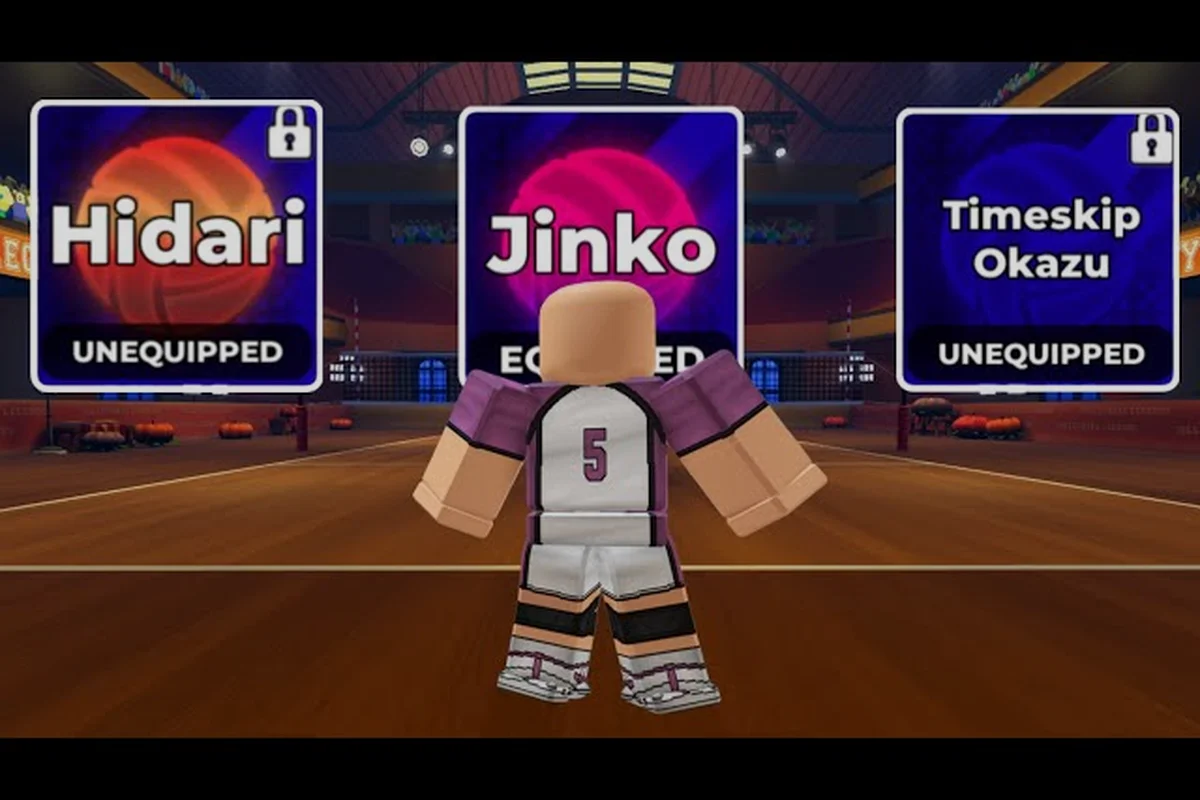
A reliable backcourt anchor changes the entire geometry of a ranked match, yet most players pick a style based on highlight-reel blocks rather than dig consistency. The volleyball legends best defender style is not always the flashiest option on the roster, but it is the one that keeps rallies alive when a cross-court spike rips toward the deep corner. Understanding how defensive styles interact with offensive pressure and support rotations gives you a concrete edge before the first serve.
Why Defender Styles Control the Rally Tempo
Defender styles in Volleyball Legends do more than increase your dig radius or reduce knockback. They dictate how early you can commit to a read, how quickly you recover from a pancake, and whether a broken play turns into a structured counterattack. Players who treat defense as a passive fallback lose points to teams that treat it as the first phase of offense.
The core loop of a strong backcourt presence starts with pre-contact positioning. A defender style with high reaction speed and low recovery frames lets you hold the middle of the court longer, which forces opposing hitters to aim for tighter windows. When you hold the middle, you shrink the viable attack lanes without ever touching the ball.
Community testing consistently shows that the best defensive results come from pairing a dedicated defender style with a support style that boosts stamina regeneration. Without that pairing, even the most precise digger runs out of gas by the third set.
| Attribute | Why It Matters for Defenders | Ideal Priority |
|---|---|---|
| Reaction Speed | Determines how early you can commit to a dig direction | High |
| Recovery Frames | Controls how fast you can stand up after a pancake | High |
| Dig Radius | Expands the safe zone around your character model | Medium |
| Stamina Cost | Affects how many consecutive digs you can attempt | Medium |
| Block Assist | Helps when you rotate to the front row | Low |
The balance between reaction speed and recovery frames is what separates a defender who saves one ball per rally from one who saves three. A style with high reaction speed but slow recovery leaves you vulnerable to the second touch, which is exactly where smart offenses aim their tips.
Breaking Down Defensive Style Archetypes
Volleyball Legends organizes its styles into broad archetypes that overlap with offensive and support roles. The volleyball legends defensive styles category includes pure backcourt specialists, hybrid blockers, and counterattack-oriented diggers. Each archetype solves a different problem, and the best defender style for your ranked climb depends on which problem your team faces most often.
Pure Backcourt Specialists
These styles maximize dig radius and reaction speed while sacrificing almost all front-row utility. They are built for players who stay in the back row for entire rotations and rarely contest at the net. In practice, a pure backcourt specialist often stacks Libero's Instinct with Floor General to push dive recovery frames below the threshold where most spike feints become unreactable—turning what would be a clean kill into a routine pancake dig. The trade-off is stark: without Block Assist or Quick Setter traits, your front-row rotations become a liability, and your team must route every defensive sequence through your positioning rather than expecting you to contribute at the tape.
The advantage is obvious: you become a wall behind the block. The disadvantage is equally clear: when you rotate forward, your style contributes almost nothing to the net battle. Teams that run a pure backcourt specialist need a strong blocker in the front row to funnel attacks into your zone.
Hybrid Block-Dig Styles
Hybrid styles split their attribute budget between block assist and dig radius, typically landing around 60–70% of what a pure specialist reaches in either stat. The practical consequence shows up most clearly on middle attacks: a hybrid defender can still contest quick sets at the net with a partial block assist bonus, then transition into a shortened dig radius that covers the seam between positions 5 and 6. What they sacrifice is the extreme edge coverage — a pure dig specialist with max dig radius reaches the deep line shot that lands two body-lengths outside a hybrid's circle, while a pure block specialist converts that same rotation into a kill block instead of a soft deflection. The hybrid's real ceiling is consistency of presence, not peak output in any single defensive event.
For solo queue players, hybrid styles often feel more consistent because you never suffer through a dead rotation. The trade-off is that you will lose some digs that a pure specialist would have reached, especially on deep cross-court shots.
Counterattack Diggers
Counterattack diggers prioritize recovery frames and pass accuracy over raw dig radius, which means their value shows up in the milliseconds after a pancake save or a diving one-arm touch. In fast offense teams, a clean 70–80% pass quality rating from the counterattack digger lets the setter immediately run a quick middle or a shoot to the outside instead of defaulting to a high ball. This is why many volleyball legends best defender style builds pair this archetype with offensive styles that punish slow transitions—if the digger's pass drifts even a meter off the net, the entire fast offense collapses into a predictable out-of-system swing.
This archetype shines when your team already has a reliable primary digger, because the counterattack digger's job is not to win the first touch but to convert chaos into tempo. When a pancake save pops the ball sideways or a diving one-arm touch sends it drifting toward the three-meter line, the counterattack digger steps in with a recovery frame advantage that lets them square up faster than a pure backcourt specialist could. That extra fraction of a second is the difference between a 70% pass quality rating that lets the setter run a quick middle and a 55% emergency bump that forces a high outside set. In volleyball legends style synergy terms, this archetype acts as a force multiplier for offensive styles like fast-tempo or quick-middle builds—without the counterattack digger's clean second touch, those styles lose their speed edge and fall back into predictable out-of-system swings.
| Archetype | Primary Strength | Weakness | Best Team Fit |
|---|---|---|---|
| Pure Backcourt | Maximum dig radius | Dead front-row rotations | Coordinated 3-stack |
| Hybrid Block-Dig | Consistent all rotations | Lower dig ceiling | Solo queue |
| Counterattack Digger | Clean transition passes | Smaller safe zone | Fast offense teams |
The choice between these archetypes should reflect your actual rotation pattern, not just your personal preference. If you spend 70 percent of the match in the back row, a pure specialist makes sense. If you rotate evenly, a hybrid prevents wasted rotations.
How Offensive and Support Styles Shape Your Defense
Defense does not exist in a vacuum. The volleyball legends offensive styles your opponents run will determine which defensive attributes matter most, while your own team's support styles determine how long you can sustain high-intensity digging. Against a Power Spiker offense that stacks raw Kill Power and forces deep-line shots, you need a defender whose Digging stat and Reaction Time are high enough to convert hard-driven balls into playable passes — a low-reaction build will simply watch the ball fly past before the dive animation even starts. Conversely, when facing a Tactical Setter lineup that spams Dump Shots and Cut Shots at sharp angles, Positioning and Lateral Quickness become the priority, since the ball rarely comes straight at you. On your own side of the net, pairing a Libero-style defender with a support legend who boosts Stamina Regeneration or Dive Recovery lets you chain multiple digs in a single rally without your Defensive Stance meter bottoming out — a synergy that collapses instantly if your support legend instead buffs only Serve Power or Block Height, leaving you stranded after the first save.
Reading Offensive Style Patterns
Power-based offensive styles tend to hit through the block, which means defenders face more high-velocity rebounds and fewer clean tips. These attacks require a defender style with high knockback resistance and a wide dig radius, because the ball often deflects unpredictably off the block.
Finesse-based offensive styles rely on placement and timing. They produce more tips, roll shots, and sharp cross-court angles. Against these hitters, reaction speed matters more than raw radius, because you need to change direction late without committing early.
A common mistake is running the same defender style against every opponent. The best ranked players adjust their style selection based on the opposing offense, which is why understanding volleyball legends style combos gives you a meaningful advantage in draft-style lobbies.
Support Style Synergy for Defenders
Support styles that boost stamina regeneration or reduce ability cooldowns extend your defensive uptime dramatically. A defender who can attempt a full-effort dig on every rally is far more valuable than one who has to conserve energy for the final set.
The strongest support pairings for backcourt defenders include styles that grant movement speed after a successful dig. This lets you recover from a pancake, sprint back to your base position, and reset before the next attack arrives. Without that speed boost, you often get caught in no-man's land between the ten-foot line and the end line.
| Support Style Effect | Impact on Defender | Priority for Backcourt |
|---|---|---|
| Stamina Regeneration | More consecutive dig attempts | Essential |
| Post-Dig Movement Speed | Faster reset after a save | High |
| Ability Cooldown Reduction | More frequent defensive abilities | Medium |
| Pass Accuracy Buff | Cleaner transition sets | Medium |
| Block Assist Buff | Better front-row coverage | Low |
The volleyball legends style synergy between a counterattack digger and a support style that boosts pass accuracy is particularly strong. The combination turns routine digs into fast-break opportunities, which pressures the opposing defense to scramble on their own side of the net.
Building a Ranked-Ready Defender Loadout
Ranked play rewards consistency over highlight plays. A defender who saves 90 percent of hittable balls is more valuable than one who makes one spectacular pancake per set but whiffs on routine digs. Building a ranked-ready loadout means choosing a style, pairing it with the right support, and drilling the positioning habits that make the attributes pay off.
Defender Style Decision Checklist
Before locking in a defender style for ranked, run through a quick checklist. First, identify your rotation pattern: are you primarily a back-row player, or do you rotate through all six positions? Second, check the opposing offense: are they power-heavy or finesse-heavy? Third, confirm your support pairing: do you have stamina regeneration and post-dig movement speed covered?
If you answer all three questions honestly, the style choice usually becomes obvious. Players who skip this process end up with a style that looks good on paper but underperforms in their actual matches. The volleyball legends best defender style for one player may be a poor fit for another, because ranked lobbies vary so much in offensive composition.
Positioning Habits That Multiply Your Attributes
Even the best defender style cannot save you from poor positioning. The single most impactful habit is holding the middle until the hitter commits. When you stand in the middle of the backcourt, you are equidistant from both corners, which means you can reach either side with a single step.
The second habit is reading the hitter's shoulder angle rather than the ball trajectory. Shoulders tell you where the attack is going before the ball leaves the hand, while watching the ball only gives you information after contact. Players who master shoulder reads consistently beat players with faster reaction attributes, because they start moving earlier.
The third habit is resetting to base after every dig, even when the rally continues. A defender who lingers after a save leaves a gap that smart setters exploit with a quick tip. Reset discipline turns a good style into a great one.
| Habit | Why It Works | Common Mistake |
|---|---|---|
| Hold the middle | Equal distance to both corners | Drifting to one side early |
| Read shoulder angle | Earlier commitment window | Watching only the ball |
| Reset after every dig | No gaps for tips | Lingering after a save |
| Pre-commit on deep shots | Faster reaction on power hits | Hesitating at the end line |
These habits compound with your style attributes in ways that determine whether you reach the ball at all. A defender with high reaction speed who also reads shoulders will reach balls that a slower player never touches, while a fast player who watches only the ball wastes their attribute advantage entirely. This is why the Libero style's high Digging stat only becomes oppressive when paired with shoulder-read timing — the attribute lowers the recovery frames after a failed read, but it cannot create the early commitment window on its own. Conversely, a Defensive Specialist running Quick Reflexes can bait cross-court hitters into thinking the line is open, then punish the predictable angle because they started moving two frames before contact. The table above shows why pre-commit on deep shots is listed as a habit rather than a style perk: no style in Volleyball Legends grants immunity to hesitation at the end line, so the habit must be trained independently of whatever defender style you queue with.
Comparing Top Defender Style Candidates
The meta for defensive styles shifts with each balance patch, but certain candidates consistently appear near the top of community tier lists. The volleyball legends meta tier list tracks the strongest defensive options as the meta evolves, and it is worth checking before you commit to a style unlock.
The Current Backcourt Favorites
One standout archetype is the counterattack digger with a clean-pass passive. This style turns defensive stops into immediate offensive pressure, which is why it appears so often in coordinated three-stacks. Solo queue players often prefer a hybrid block-dig style instead, because it never leaves them useless in the front row.
The volleyball legends ability styles guide breaks down the specific abilities attached to each style, which helps you understand exactly what your unlock gives you beyond raw attributes. Abilities matter more than base stats in close matches, because a well-timed defensive ability can erase an entire offensive possession.
Style Unlock Priority for Defenders
If you are building a defender-focused account, prioritize unlocking styles that fit your rotation pattern before chasing the flashiest option. The volleyball legends style unlock guide covers the unlock requirements and roster details, so you can plan your progression without wasting currency on a style you will never use.
A common trap is unlocking a high-tier defender style that requires a specific support pairing to function. Without that pairing, the style underperforms, and you end up frustrated with a purchase that looked great in isolation. Always check the synergy requirements before you commit.
| Priority | Style Type | Reason to Unlock First |
|---|---|---|
| 1 | Hybrid Block-Dig | Consistent value in all rotations |
| 2 | Counterattack Digger | Strong with coordinated teams |
| 3 | Pure Backcourt | High ceiling, low floor |
| 4 | Offense-First Defender | Niche, matchup-dependent |
The unlock order matters because currency is limited, especially for free-to-play players. A hybrid style gives you the most consistent value per unlock, while a pure specialist only pays off if you have a team that can cover your front-row rotations.
Frequently Asked Questions
What is the volleyball legends best defender style for solo queue?
For solo queue, a hybrid block-dig style is usually the safest choice because it maintains value across all six rotations. Pure backcourt specialists leave you useless in the front row, which hurts when your random teammates cannot cover the net. The hybrid ceiling is lower, but the consistency wins more games over a full ranked climb.
How do I counter power-based offensive styles as a defender?
Prioritize knockback resistance and a wide dig radius, because power hitters produce unpredictable rebounds off the block. Position slightly deeper than usual and hold the middle until the hitter commits. A defender style with high recovery frames also helps you reset quickly after absorbing a hard-driven ball.
Do support styles really matter for defenders?
Yes, support styles that boost stamina regeneration and post-dig movement speed extend your defensive uptime dramatically. Without stamina support, you cannot attempt full-effort digs on every rally, and without movement speed, you get caught out of position after a save. The right support pairing turns a good defender into a backcourt wall.
Should I change my defender style based on the opponent?
Yes, adjusting your style based on the opposing offense is a high-level habit that pays off in ranked play. Power-heavy offenses demand knockback resistance and radius, while finesse offenses demand reaction speed and late-commit ability. The best players keep two defender styles ready and swap based on the matchup.
How important are defensive abilities compared to base stats?
Defensive abilities often matter more than base stats in close matches, because a well-timed bailout ability can erase an entire offensive possession. A style with slightly lower attributes but a strong defensive ability will frequently outperform a stat-stick style in high-level lobbies. Check the volleyball legends ability styles guide for specific ability breakdowns.
The backcourt is where ranked matches are won or lost, and the volleyball legends best defender style is the one that matches your rotation, your team's support pairing, and the offense you face most often. Community gameplay breakdowns, like the defense mastery video from Karr, show how top players read hitters and reset after every dig. Build your loadout around consistency, drill the positioning habits, and let your style attributes multiply the work you already put in.