
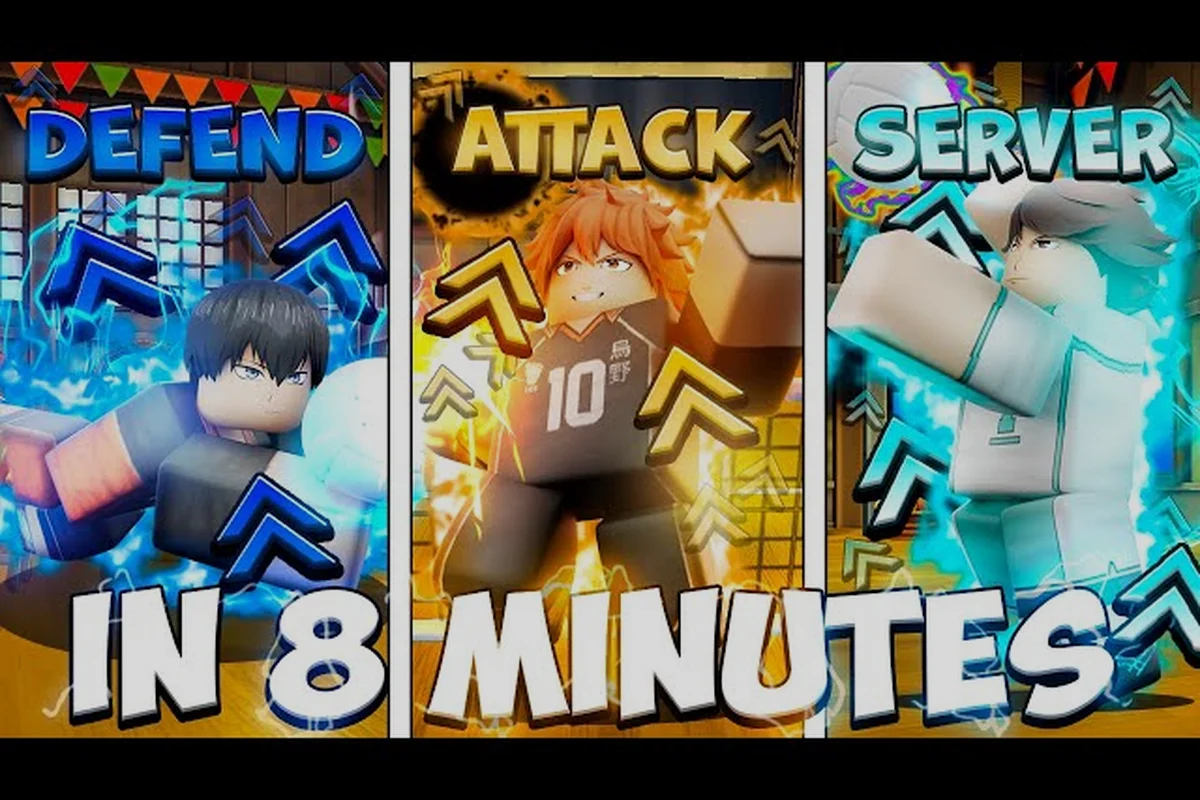
Scoring in Volleyball Legends rarely comes from raw power alone. The players who consistently break defenses are the ones who treat offense as a read-based system, not a reaction contest. This guide breaks down the volleyball legends offense strategies that turn predictable rotations into guaranteed points, with specific timing windows, counter-spike setups, and trick-shot angles you can practice immediately.
Reading the Setter to Predict the Attack
Before you can counter an attack, you need to know where the ball is going. The setter is the offense's quarterback, and their body language telegraphs the play before the ball leaves their hands. Most intermediate players watch the ball, but elite defenders watch the setter's hips, shoulders, and wrist angle during the approach.
Setter Tells That Reveal the Play
Community testing has identified three reliable tells that appear consistently across ranked matches. When the setter plants their back foot early and squares their shoulders to the net, they are almost always setting a high outside ball. When they keep their hips open to the right side while their hands stay low, expect a quick middle set. And when they jump-set with a pronounced wrist snap, the ball is going behind them to the opposite hitter.
| Setter Tell | Likely Set Target | Counter Response |
|---|---|---|
| Back foot planted early, shoulders square | High outside ball | Shift block to left pin, delay jump half-beat |
| Hips open right, hands stay low | Quick middle set | Commit middle blocker early, read hitter's approach |
| Jump-set with wrist snap | Back set to opposite | Right-side blocker cheats inward, watches hitter's shoulder |
| One-hand set while falling | Desperation tip to nearest hitter | Play deep, expect off-speed roll shot |
The key is not memorizing these as rules but using them as probabilities. A setter who knows you are reading them will start mixing release points, which is why the next layer of offense involves reading the attacker's approach angle and arm swing.
Combining Setter Reads with Attacker Reads
The setter tells you where the ball is going, but the attacker tells you how hard and where it will land. When you combine both reads, you get what high-level players call a two-phase read: first the setter's release point narrows the possible attack zones, then the attacker's approach line and shoulder rotation narrow the exact contact point. This is the foundation of volleyball legends reading attackers as a defensive skill.
Counter-Spike Timing and Positioning
A counter spike is not just a block. It is a deliberate offensive response that turns an opponent's attack into your transition point. The most effective counter-spike sequences happen when you read the attack early enough to position your block, then immediately transition into an approach as the ball rebounds.
The Three Counter-Spike Windows
There are three distinct windows where a counter spike works. The first is the soft block counter, where you angle your block to deflect the ball upward and backward into your own court, giving your setter a clean transition ball. The second is the tool-the-block counter, where you intentionally hit the opponent's block and use the deflection to reset your offense. The third is the dig-to-transition counter, where a controlled dig lands near the setter's position, allowing a fast out-of-system swing.
| Counter Window | Setup Requirement | Execution Detail |
|---|---|---|
| Soft block counter | Blocker jumps slightly late, hands angled back | Ball deflects into own court, setter runs transition |
| Tool-the-block counter | Attacker aims for outside edge of block | Deflection flies out of bounds or high into own court |
| Dig-to-transition counter | Defender reads cross-court angle early | Dig lands 3-4 feet from setter, fast tempo swing |
The soft block counter is the most reliable because it does not require perfect timing. You simply jump a half-beat late and angle your palms backward, which turns a hard-driven spike into a soft rebound that your setter can handle. The tool-the-block counter is riskier but more rewarding, because it uses the opponent's own block as a weapon.
Positioning for the Counter Spike
Your starting position matters more than your jump height. When you anticipate a counter-spike opportunity, you should already be shifting your weight toward the transition zone before the block contact happens. Players who wait until after the block to start moving lose the half-second window that makes the counter spike effective. The best counter-spikers start their transition step while the ball is still in the air, which is why reading the setter early is so critical.
Trick Shots That Break Defensive Rhythm
Trick shots in Volleyball Legends are not just for highlight reels. They serve a tactical purpose: they force defenders to respect multiple attack options, which opens up your primary swing. When a defense knows you only hit cross-court, they can camp that angle. When they know you might throw a cut shot, a tip, or a deep roll shot, they have to cover more court.
High-Percentage Trick Shot Options
The most effective trick shots are the ones that look like your normal swing until the last possible moment. A wrist-away cut shot uses the same approach and jump as a full swing, but you snap your wrist at contact to send the ball sharply down the line instead of cross-court. A deep roll shot uses a soft palm contact to send the ball over the block and into the back corner, which works best when the defense is playing shallow.
| Trick Shot | Best Used When | Defensive Weakness It Exploits |
|---|---|---|
| Wrist-away cut shot | Blocker commits to cross-court | Line defender out of position |
| Deep roll shot | Defense plays shallow, expecting hard swing | Back corners undefended |
| Off-speed tip | Blocker jumps early, hands high | Gap between block and defense |
| Bic set fake | Middle blocker commits to quick attack | Opposite hitter left open |
The bic set fake deserves special attention because it combines setter deception with attacker timing. The setter shows a quick middle set, drawing the middle blocker into the air, then pushes the ball slightly behind to the opposite hitter who is already in the air. This is one of the most effective volleyball legends trick shots because it attacks the exact moment when the defense is most committed.
When Not to Use Trick Shots
Trick shots fail when they become predictable. If you throw a cut shot on every third swing, the defense will start sitting on it. The best approach is to use trick shots as a change-up, not a primary weapon. Keep your hard swing as the default, then mix in a trick shot when the defense shows a specific weakness, such as a line defender who cheats too far inside or a blocker who consistently jumps early.
Clutch Plays and Late-Game Decision Making
Clutch plays are not about doing something extraordinary. They are about doing the ordinary things correctly when the pressure is highest. In Volleyball Legends, late-game offense comes down to three decisions: which hitter to set, which shot to use, and when to take a risk.
The Clutch Decision Framework
When the score is tight and the setter has to make a split-second choice, the best players default to their highest-percentage option, not their flashiest one. This means setting the hitter who has been most consistent all match, not the one who hit one highlight-worthy spike in the first set. It means using the shot you have practiced a thousand times, not the trick shot you saw in a video.
| Situation | Default Decision | When to Deviate |
|---|---|---|
| 20-20, side-out needed | Set your most consistent hitter | If that hitter is being triple-blocked, set the opposite |
| 24-23, set point | Use your primary swing, no trick shots | If the blocker has read your primary swing all match, use cut shot |
| 14-15, match point against | Take the risk, swing for the line | If the line defender is camped there, hit cross-court |
| Transition after a dig | Set the hitter with the best approach angle | If that hitter is out of position, set the back-row attack |
The framework is simple: default to consistency, deviate only when the defense has proven they can stop your default. This is what separates clutch players from players who choke. The choker tries to do something new under pressure; the clutch player trusts the reps they have already put in.
Building Clutch Confidence Through Repetition
Clutch performance is built in practice, not in the moment. Players who want to improve their volleyball legends clutch plays should spend time in training mode running the exact scenarios they will face in a tight match. Set the score to 20-20, give yourself one side-out opportunity, and run your offense. Do this twenty times, and the twenty-first time in a real match will feel automatic.
Defense Strategies That Feed Your Offense
Offense and defense are not separate systems in Volleyball Legends. Your defensive positioning determines the quality of your transition offense, and your offensive shot selection determines how easy your defense has to work. The best teams treat defense as the first phase of offense.
Defensive Formations That Create Transition Opportunities
A perimeter defense positions three defenders along the back line, which works best when the opponent's offense relies on hard-driven spikes from the pins. A rotation defense shifts defenders based on where the setter is, which works best against teams that run a varied offense. Both formations have a specific goal: get the ball to the setter in a position where they can run a fast transition.
| Defensive Formation | Best Against | Transition Advantage |
|---|---|---|
| Perimeter defense | Hard-driven pin attacks | Deep digs land near setter, fast tempo available |
| Rotation defense | Varied offense with middle attacks | Defenders already moving toward transition zones |
| Commit block defense | Single dominant hitter | Block creates soft rebound, easy transition |
| Read block defense | Balanced offense | Blocker stays grounded longer, faster to transition |
The commit block defense is particularly effective against teams that rely on one dominant hitter. You commit your middle blocker to that hitter on every set, which either stuffs the attack or forces the hitter to hit around the block. Either outcome gives your defense a better chance to control the ball and transition into offense.
How Defense Strategies Create Offensive Rhythm
When your defense consistently gets the ball to the setter in a good position, your offense can run at full speed. When your defense is scrambling and the setter has to chase down errant passes, your offense becomes predictable. This is why volleyball legends defense strategies are not just about stopping the opponent—they are about giving your own offense the best possible starting position. For a deeper breakdown of how positioning affects your back-row defense, the positioning guide covers the specific zones and rotations that keep your transition game fast.
Frequently Asked Questions
What is the best offense strategy for beginners in Volleyball Legends?
Beginners should focus on a high-percentage offense built around consistent outside sets and hard cross-court swings. Avoid trick shots until your basic swing is reliable, because a missed trick shot gives the opponent a free transition. Master the outside set, the cross-court swing, and the deep roll shot before adding anything else.
How do I read the setter more effectively?
Watch the setter's hips and shoulders instead of the ball. The ball follows the setter's body position, so if you read the body early, you know where the ball is going before it leaves their hands. Practice in training mode by watching only the setter and calling out the set location before the ball arrives.
When should I use a counter spike instead of a regular block?
Use a counter spike when you read the attack early enough to position your block deliberately. A soft block counter works when you jump slightly late and angle your palms backward, turning the opponent's spike into a transition ball for your setter. If you are late to the block, just get your hands up and focus on controlling the rebound.
What is the highest-percentage trick shot in Volleyball Legends?
The deep roll shot is the highest-percentage trick shot because it requires the least precision. You use a soft palm contact to send the ball over the block and into the back corner, which works whenever the defense is playing shallow. It looks like a hard swing until contact, so defenders cannot react early.
How do I stay calm during clutch plays?
Build clutch reps in training mode by simulating tight-score scenarios. Set the score to 20-20 and run your offense twenty times in a row. The repetition makes the real match feel automatic, which reduces the panic that causes players to abandon their primary swing and try something risky.