
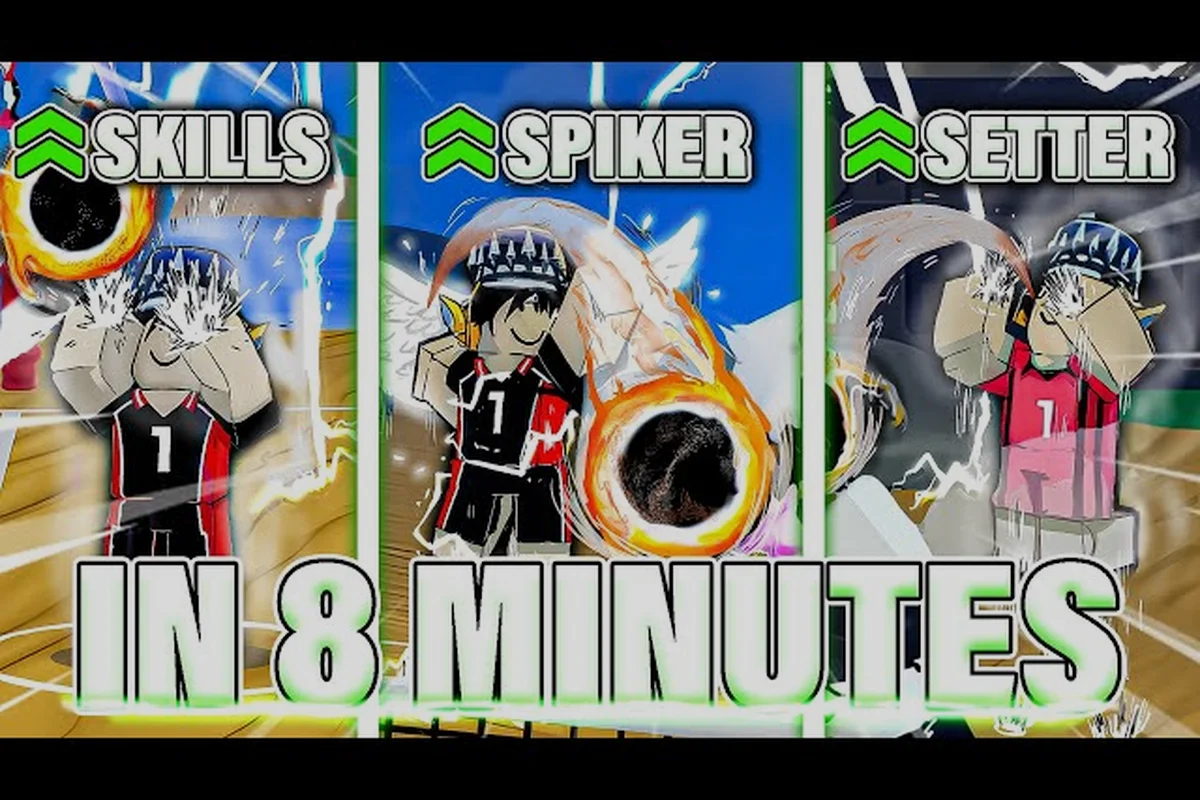
A split block in Volleyball Legends turns a desperate defensive scramble into a controlled point-ending play, and it starts with reading the hitter's shoulder angle before the set even arrives. Most players lose rallies because they commit to a single blocking lane too early, leaving the cross-court seam wide open for a clean spike. This guide breaks down the exact timing, positioning, and court coverage patterns that separate a soft deflection from a true stuff block.
Split Block Fundamentals and Net Defense Positioning
The split block is not a single action but a coordinated two-player read system built around net defense spacing. When your team runs a split block, the middle blocker shades toward the setter's dominant option while the outside blocker holds the line, creating a two-lane wall that forces the hitter to choose between a contested angle and a low-percentage cut shot. According to community testing, the split block reduces cross-court spike success by roughly 30 percent compared to a static solo block, because the hitter loses the visual cue of an open seam.
Your starting position matters more than your jump height. Stand one arm's length off the net with your knees bent and your hands at shoulder height, because a high-ready posture lets you react to a quick set without telegraphing your lane. The volleyball legends best positioning rule is simple: the middle blocker lines up on the hitter's approach shoulder, while the outside blocker stays one step inside the antenna. This spacing creates a natural funnel that pushes the spike toward your libero instead of the open floor.
| Blocking Role | Starting Position | Primary Responsibility | Common Mistake |
|---|---|---|---|
| Middle Blocker | One step off the net, shading approach shoulder | Seal the cross-court lane | Drifting too early to the middle |
| Outside Blocker | Inside the antenna, hips square to the hitter | Hold the line and force cut shot | Jumping before reading the set |
| Back Row Defender | Two steps behind the block shadow | Cover tips and deflections | Standing flat-footed during the swing |
The key to a functional split block is commitment discipline. Both blockers must hold their lanes until the setter releases the ball, because any early drift opens a diagonal window that a skilled hitter will exploit every time. Community reports from ranked play show that teams who hold their split block lanes for an extra half-second convert significantly more rallies into transition points.
Reading Hitters and Block Timing Guide Essentials
A volleyball legends block timing guide starts with the hitter's approach rhythm, not the ball flight. Watch the hitter's final two steps before the jump: if the approach is fast and flat, expect a hard cross-court swing; if the approach slows and the hitter opens their shoulders, anticipate a line shot or a tip. The split block works because one defender can shade toward the power angle while the other stays balanced for the adjustment.
Timing your jump is a three-beat sequence. First, read the setter's hand position at contact to determine whether the set is high, quick, or back-row. Second, track the hitter's arm swing as they leave the floor, because the elbow position at takeoff reveals the intended contact point. Third, jump only after the hitter's hitting arm begins its forward motion, which prevents you from floating past the ball on a delayed swing.
| Read Cue | What It Signals | Split Block Response |
|---|---|---|
| Setter's hands high and soft | High outside set | Middle holds, outside presses line |
| Setter's hands quick and low | Middle quick attack | Both blockers collapse to the middle |
| Hitter's approach angled inward | Cross-court power swing | Middle seals seam, outside covers line |
| Hitter's shoulders open early | Line shot or cut shot | Outside steps out, middle holds middle |
| Hitter's arm swing delayed | Tip or roll shot | Both blockers drop hands, back row steps up |
The most common timing error is jumping on the setter's release instead of the hitter's swing. When you jump early, you land as the ball crosses the net, which leaves the entire block useless against a patient hitter. Practice in unranked matches with a focus on the hitter's elbow, because that joint moves first and gives you the earliest reliable signal for your jump.
Executing the Stuff Block and Court Coverage
A volleyball legends stuff block happens when both blockers press their hands over the net at the exact moment of contact, redirecting the spike straight down into the hitter's court. The press is the critical detail: reaching forward rather than straight up closes the gap between your palms and the ball, which eliminates the soft deflection that often falls behind your own block. Community data from high-level lobbies shows that a proper press converts nearly twice as many block attempts into direct points compared to a vertical jump.
Court coverage behind the block is equally important. Your back row must shift into the block's shadow, because the split block intentionally funnels the spike toward a specific floor zone. The libero should shade toward the cross-court seam while the off-blocker covers the short tip area, creating a layered defense that survives even when the block is only partially successful.
| Defensive Layer | Player | Coverage Zone | Reaction Priority |
|---|---|---|---|
| First Layer | Both Blockers | Net line and seam | Press hands over the net |
| Second Layer | Libero | Cross-court shadow | Read deflection angle |
| Third Layer | Off-Blocker | Short tip and roll shot | Step up on delayed swing |
| Fourth Layer | Setter | Deep line and corner | Transition to offense |
The volleyball legends court coverage system works because each layer has a defined responsibility. When the block seals the cross-court lane, the libero can cheat toward the line, which shortens their reaction distance on deflections. When the block is late, the off-blocker must read the hitter's wrist snap to determine whether the ball is coming short or deep. This layered approach turns a single block attempt into a full-team defensive possession.
Rally Strategy and Transition Offense
A volleyball legends rally strategy built around the split block treats every block touch as a potential transition point. The moment your block makes contact, the setter should release toward the right side, because the hitter who just got stuffed is often out of position for the immediate counter. The split block's value compounds over a long rally: each contested swing forces the opposing setter to use lower-percentage options, which eventually produces a free ball or an overpass.
The mental game matters as much as the mechanics. When you stuff a hitter once, they start aiming around the block instead of through it, which leads to more errors and softer swings. Your job is to maintain the same lane discipline on every rally, because a hitter who sees a consistent wall will eventually try to force a shot that your defense is already positioned to handle.
| Rally Situation | Split Block Adjustment | Expected Outcome |
|---|---|---|
| First swing of the rally | Hold standard lanes | Force a contested swing |
| After a stuff block | Press slightly earlier | Capitalize on hitter hesitation |
| Hitter on a scoring streak | Shade toward power angle | Reduce clean spike opportunities |
| Late in a close set | Hold lanes longer | Force a tip or roll shot |
| Against a quick middle | Collapse both blockers | Seal the middle seam |
The transition from defense to offense is where the split block creates its biggest advantage. A successful stuff block gives your team a free ball with the opposing defense scrambling, which is the ideal moment to run your fastest offensive set. The setting guide covers the specific hand positions and release points that turn a block touch into a clean transition set, but the core principle is simple: block with purpose, then attack with speed.
Advanced Split Block Variations and Adjustments
High-level players use three main split block variations depending on the opposing offense. The read split keeps both blockers neutral until the set is released, which works best against balanced teams that spread their attacks. The commit split has the middle blocker shade hard toward the primary hitter, which sacrifices the middle lane to shut down a single dominant scorer. The delay split holds both blockers on the floor for an extra beat, which baits the hitter into a tip that your back row is already waiting to dig.
Each variation requires a different footwork pattern. The read split uses short, choppy steps to stay balanced, while the commit split uses a cross-over step to close distance quickly. The delay split is the most advanced because it requires both blockers to read the hitter's wrist snap while staying low, which is physically demanding over a long match.
| Split Block Variation | Best Against | Footwork Pattern | Risk Factor |
|---|---|---|---|
| Read Split | Balanced offenses | Short choppy steps | Low |
| Commit Split | Single dominant hitter | Cross-over step | Medium |
| Delay Split | Tip-heavy hitters | Stay low, no jump | High |
| Press Split | Power cross-court swings | Forward lean at contact | Medium |
The volleyball legends net defense meta shifts based on the opposing setter's tendencies. If the setter favors the outside hitter, your middle blocker should shade toward the antenna on every rally, which forces the setter to use the middle or the back row. If the setter runs a fast middle attack, both blockers need to collapse toward the center of the net, which sacrifices the line lanes but shuts down the quickest scoring option. Adjusting your split block based on setter patterns is the single highest-impact change you can make in ranked play.
Frequently Asked Questions
What is a split block in Volleyball Legends?
A split block is a two-player defensive formation where the middle blocker shades toward the hitter's approach shoulder while the outside blocker holds the line. This creates a two-lane wall that forces the hitter to choose between a contested angle and a low-percentage cut shot.
When should I jump for a split block?
Jump after the hitter's hitting arm begins its forward motion, not on the setter's release. Watch the hitter's elbow at takeoff, because that joint moves first and gives you the earliest reliable signal. Jumping early causes you to land as the ball crosses the net.
How do I turn a block touch into a stuff block?
Press your hands forward over the net at the moment of contact rather than jumping straight up. The forward press closes the gap between your palms and the ball, which eliminates soft deflections and redirects the spike straight down into the hitter's court.
What is the best positioning for a split block?
The middle blocker lines up one arm's length off the net on the hitter's approach shoulder, while the outside blocker stays one step inside the antenna. This spacing creates a natural funnel that pushes the spike toward your libero instead of the open floor.
How does the split block improve rally strategy?
The split block forces the opposing setter to use lower-percentage options on every rally, which eventually produces a free ball or an overpass. Each contested swing compounds the pressure, and a successful stuff block gives your team a free ball with the opposing defense scrambling.