
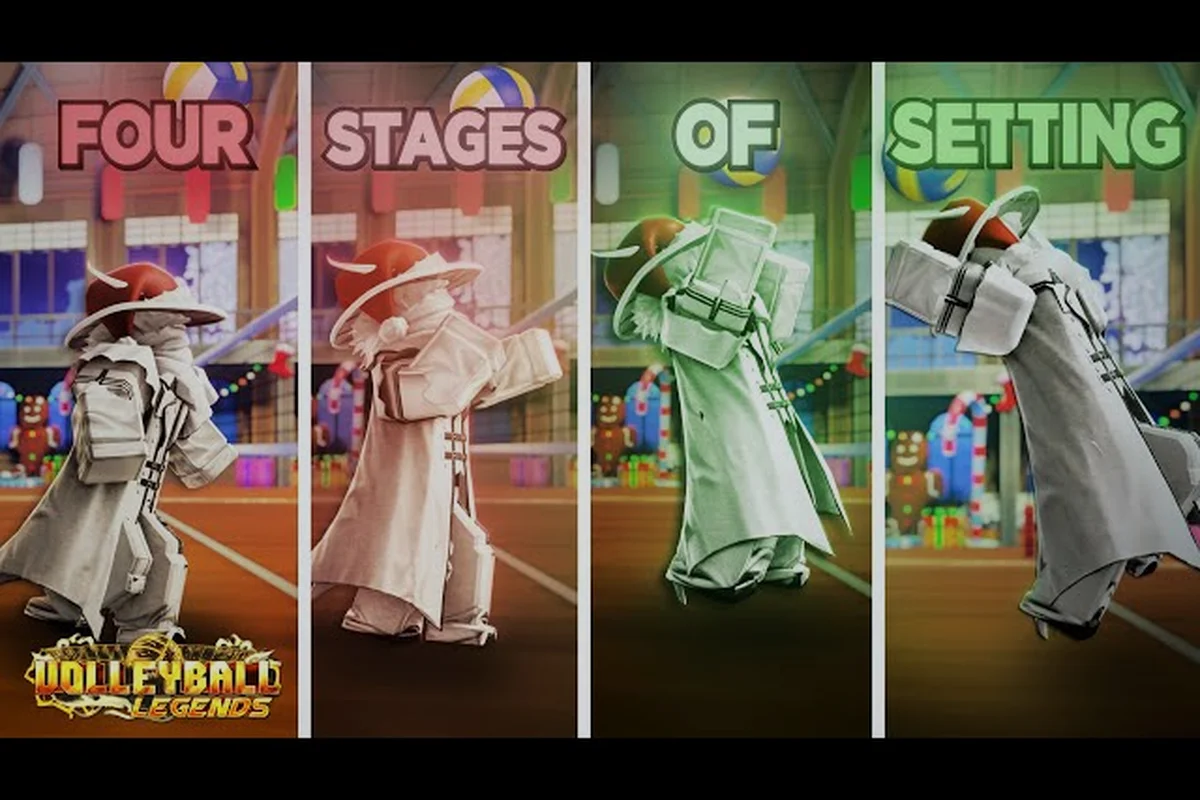
A setter in Volleyball Legends controls the entire offensive tempo, and a weak set turns even the strongest spiker into an easy target for blockers. This volleyball legends setting guide breaks down the exact mechanics, ability picks, and positioning habits that separate a reliable playmaker from a liability. You will learn how to convert messy bump receives into clean sets, time diving saves, and coordinate double blocks and triple blocks without losing your defensive shape.
According to the official volleyball legends setting guide video, the setter’s positioning and hand mechanics are broken down frame-by-frame to show how legends maintain a consistent contact point above the forehead.
Core Setting Mechanics and Ability Priorities
Setting in Volleyball Legends is not just about pressing the set button near the ball. The game tracks your approach angle, release height, and set tempo, which means a setter who stands flat-footed under the ball will consistently produce slower, higher arcs that blockers read easily. According to community testing, the fastest way to improve is to treat every set as a two-phase action: first, position your character so the ball drops slightly in front of your forehead; second, release the set while moving toward the target hitter rather than away from them.
The Zero Gravity Set is one of the most misunderstood tools in the setter kit. When activated, it changes the ball's fall speed and lets you hold the set longer before release, which creates a deceptive pause that can freeze middle blockers. Players report that using Zero Gravity Set on a minus tempo attack—where the spiker jumps before the set is released—produces the hardest blocks to read because the blocker cannot commit early.
Best Setter Abilities for Consistent Offense
| Ability | Effect on Setting | Best Used When |
|---|---|---|
| Shield Break | Reduces blocker stability on repeated sets to the same hitter | Opponent runs a dedicated double block |
| Magnetic Pull | Slightly pulls the ball toward your setter's hands | Receiving a bump that drifts off the net |
| Zero Gravity Set | Slows ball descent and extends release window | Running quicks or minus tempo plays |
| Quick Step | Increases lateral movement speed before the set | Chasing down shanked passes near the sideline |
Shield Break is especially valuable against teams that commit to a double block on your best spiker, because it punishes the blockers for staying in the same lane. Magnetic Pull functions as a safety net for imperfect bump receives, letting you salvage passes that would otherwise force a free ball over the net. Your ability loadout matters more than your style rating. The two abilities that show up most often in high-rank setter builds are Shield Break and Magnetic Pull.
Setting Styles That Change Your Release Point
Your chosen style affects more than cosmetics. The Secret Setter Timeskip Kyamo style is frequently cited by players as the best setter style because its animation keeps the ball lower and faster on release, which shortens the blocker's reaction window. Pairing that style with a spiker using Sanju or Timeskip Hinto creates a rhythm where the ball travels from set to spike almost too fast for a triple block to form.
Turning Bump Receives Into Clean Sets
A setter's real job starts the moment the ball leaves the passer's arms. The volleyball legends bump receive is the foundation of every offensive sequence, and a setter who cannot adjust to imperfect passes will never unlock the full potential of the team's hitters. The key is to read the ball's spin and drift immediately after contact, because a pass with heavy topspin will drop faster than a flat pass.
Reading the Pass Before You Move
Most setters make the mistake of running to the spot where the ball currently is, rather than where it will be. When you see a bump receive drifting toward the right antenna, you should already be moving to a spot about one body length inside the antenna, because that is where a controlled set can still reach both the outside hitter and the opposite hitter.
| Pass Quality | Ball Drift | Setter Response |
|---|---|---|
| Perfect pass | Minimal drift, drops near the net | Set any tempo, including quicks |
| Medium pass | Drifts 1-2 body lengths off center | Use Magnetic Pull, set to outside or opposite |
| Shanked pass | Drifts toward sideline or back row | Prioritize a high, safe set to the outside |
| Overpass | Ball crosses the net flat | Transition to a block guide mindset immediately |
The overpass scenario is critical because it flips your role instantly. When a bump receive goes over the net, you are no longer a setter—you are the first line of defense, and your positioning determines whether the opponent gets a free swing or has to hit into a formed block.
Positioning Between the Net and the Pass
Your default starting position should be one step off the net and slightly right of center, which allows you to set both directions without telegraphing your target. When the pass comes in tight to the net, you need to jump set or use a back set to keep the ball off the net tape. Community data suggests that setters who stay too close to the net on tight passes create more overpass errors than any other single mistake.
Diving Saves and Dive Timing for Setters
The volleyball legends diving save is not just a defensive tool—it is a setter's last resort when a pass forces you out of position. The volleyball legends dive timing mechanic punishes players who dive too early, because the game locks your character into the dive animation and leaves you unable to recover before the ball drops.
When to Dive Versus When to Run
The decision to dive should be based on distance to the ball and ball height. If the ball is dropping fast and is more than two body lengths away, a dive is usually correct. If the ball is still high and drifting, running is faster and keeps your setting options open.
| Situation | Ball Height | Correct Action |
|---|---|---|
| Shanked pass near sideline | Below chest height | Dive immediately |
| Drifting pass toward back row | Above head height | Run and set overhand |
| Ball dropping near the net | Below waist height | Dive and bump set |
| Ball popped straight up | High, near the antenna | Stay on feet, adjust to jump set |
The most common dive timing error is diving before the ball starts its final descent, which causes the character to slide under the ball and miss the contact entirely. Players report that waiting an extra half-second after the ball peaks dramatically improves diving save success rates.
Recovering After a Diving Save
A diving save that pops the ball straight up is only useful if your team can still attack. After the dive, your priority is to call for help or get back to your feet fast enough to deliver a second touch. The game's recovery frames are shorter when you dive forward rather than sideways, which is why experienced setters angle their dives toward the net whenever possible.
Blocking Fundamentals for Setters
Setters are often the shortest player on the court, but that does not excuse them from the volleyball legends block guide fundamentals. A setter who can hold their own in a double block or contribute to a triple block gives the team a massive defensive edge, especially against opponents who rely on quick middle attacks.
Double Block Timing and Positioning
The volleyball legends double block requires two players to jump at the same moment and seal the same hitting lane. As the setter, you are usually the second blocker on the outside, which means you need to read the spiker's approach angle and match your jump to the blocker closest to the net.
| Block Type | Players Involved | Key Timing Cue |
|---|---|---|
| Double Block | Setter + outside hitter | Jump when spiker's hitting arm starts forward |
| Triple Block | Setter + two front-row players | Jump slightly earlier to cover more area |
| Split Block | Two blockers covering different lanes | Each blocker commits to one angle |
The double block works best when both blockers press their outside hands toward the middle of the court, which seals the cross-court angle and forces the spiker to hit line. If your teammate is late to the block, do not jump alone—a solo block against a good spiker is often worse than no block at all because it creates a false sense of coverage.
Triple Block Commitments and Risks
The volleyball legends triple block is a high-risk, high-reward play that should only be used against predictable hitters. When all three front-row players jump, the back row has to cover the entire court, which means a smart spiker will simply tip or roll shot into the open space. Community reports indicate that triple blocks are most effective against middle hitters who rarely change their attack direction. For a deeper breakdown of how to time your jump against different spiker types, the block timing guide covers the frame data and visual cues that separate a stuff block from a whiff.
Advanced Setter Strategies and Court Awareness
Once you have the basic mechanics down, the difference between a good setter and a great one comes down to decision speed and pattern recognition. The best setters in Volleyball Legends do not just react to the pass—they already know which hitter they want to set before the ball crosses the net.
Building a Setting Rhythm With Your Spikers
Every spiker has a preferred set height and tempo. The Sanju style spiker typically wants a higher, slower set that lets them time a full approach, while Timeskip Hinto thrives on fast, low sets that catch the block off guard. Your job is to memorize these preferences and deliver the right ball without being told. The bump guide explains how passers can give you better angles to work with, which reduces the number of times you have to improvise a set from a bad position.
| Spiker Style | Preferred Set Type | Setter Adjustment |
|---|---|---|
| Sanju | High, outside set | More arc, less speed |
| Timeskip Hinto | Fast, low set | Less arc, quicker release |
| Secret Spiker Styles | Varies by style | Learn through practice matches |
Managing Your Stamina Across Long Rallies
Setting is less stamina-intensive than spiking or blocking, but long rallies still drain your movement meter. If you sprint to every pass and dive for every loose ball, you will be out of position by the third or fourth touch. The best setters conserve lateral movement by taking efficient angles to the ball, which leaves enough stamina for a late dive or a quick transition to defense.
Frequently Asked Questions
What is the best ability for a setter in Volleyball Legends?
Shield Break is the best setter ability because it punishes teams that commit to a double block on your primary hitter. Magnetic Pull is a close second for salvaging imperfect bump receives. Zero Gravity Set works best when you run quicks or minus tempo attacks.
How do I improve my volleyball legends dive timing?
Wait until the ball starts its final descent before diving. Diving too early locks your character into the animation and causes you to slide under the ball. Practice in training mode by watching the ball's peak height, then counting a half-second before committing to the dive.
Should setters participate in double blocks and triple blocks?
Yes, setters should join double blocks on the outside whenever possible, but only commit to a triple block against predictable middle hitters. A poorly timed solo block creates more problems than it solves, because it leaves the back row exposed to tips and roll shots.
How do I set a shanked pass that drifts toward the sideline?
Use Magnetic Pull if you have it equipped, and prioritize a high, safe set to the outside hitter. Do not attempt a quick or minus tempo set from a bad position, because the risk of an overpass or a blocked spike is too high.
What is the best setter style in Volleyball Legends?
The Secret Setter Timeskip Kyamo style is widely considered the best setter style because its animation keeps the ball lower and faster on release. Pair it with a spiker using Sanju or Timeskip Hinto for the most effective offensive rhythm.